
Desmoplastic
Small Round Cell
Tumor Charity
We are passionate about making sure that the stories shared on our page are as diverse as those diagnosed by Desmoplastic Small Round Cell Tumour and the paths that they follow. If you would like your story or that of a loved one to be shared here please do get in touch. We want to both celebrate those who have survived or are still battling this disease and remember those who are sadly no longer with us. In the words of Terry Pratchet “No one is finally dead until the ripples the cause in the world die away.” And we are determined to make ripples…
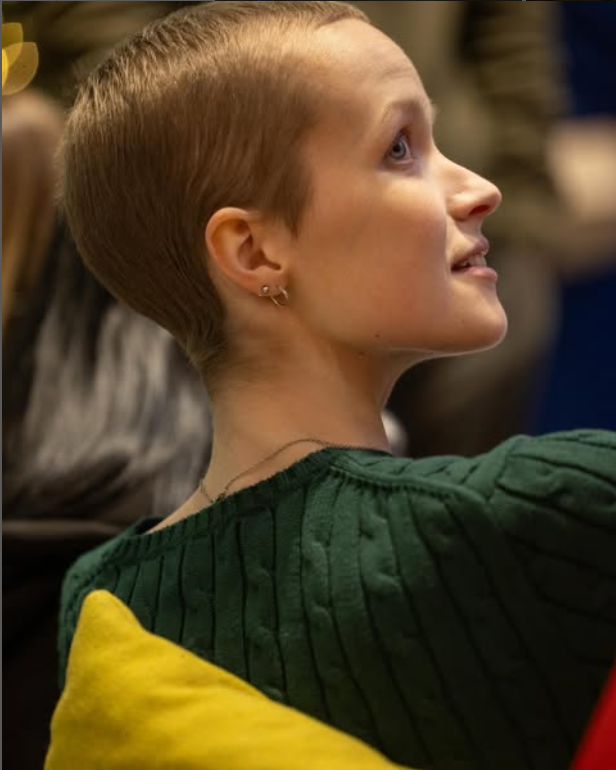

Liz was just 16 when she was diagnosed with Desmoplastic Small Round Cell Tumour. Having just started her A-Levels, she’d spent the autumn term looking around universities and planning her future. She dreamed of being a professional photographer and living in London. Until just before her diagnosis Liz had been the epitome of health, not missing a day of school since she’d had chicken pox aged seven.
Liz’s symptoms were subtle; a sore left shoulder, periods that had become gradually more painful and in the three weeks prior to her diagnosis feeling bloated. It was Christmas when Liz first mentioned not feeling quite right, she booked an appointment to see a physio in half term and put the bloating down to richer foods. Three weeks later, the bloating had become visible and the pain from her period didn’t end after the bleeding did. An emergency out of hours GP suggested an ovarian cyst was the likely cause, but when pain increased the day after she returned to A & E was given an MRI. The MRI found masses in her ovaries, omentum and liver. A diagnosis of cancer was given the following day and of DSRCT within four days. A week later she started VCD/IE chemotherapy at Leeds General Infirmary. She was their first case of Desmoplastic Small Round Cell Tumour.
In Liz’s case the NHS could not have moved more quickly. She had two cycles of VCD, but unfortunately due to the amount of ascites she had the IE component couldn’t be given. In round three her protocol was switched to VCDE. Round three also brought with it Para influenza, leaving Liz hospitalised and on oxygen support whilst she recovered. Post round three scans showed that her tumour mass had stayed broadly stable and her consultant asked her if she wanted to continue with chemotherapy given the limited effectiveness. Liz was firm that she did! Though terrified of chemotherapy to start with, by then she had lost her hair and had her port fitted. She was determined to continue.
Liz’s first consultant was medically sound, but Liz struggled to relate to her. After that appointment she changed consultants to Professor Bob Phillips; Liz loved him like family and always said speaking to him made her feel better. Bob never shied away from the truth – he gave Liz the facts she needed to live the life she had to the full and supported her in doing so. A virtual consult with Dr Emily Slotkin at Memorial Sloan in the US (who treats lots of DSRCT patients) confirmed that Liz’s condition was terminal but it also gave her the opportunity to ask questions about radiotherapy and surgery that were hard to get from the research.
Post round six scans showed a reduction in all of Liz’s tumours, her pain was vastly decreased and she was only taking 5mg of Oxycodone twice a day. For the first time her family allowed themselves to hope. Unfortunately however because of the impact on the heart, Liz had maxed out on Doxirubicin and despite the success of her current protocol a new one was needed. She had two cycles of VIA followed by two of CE. Neither were successful and her tumours continued to grow. Liz died on the 27/11/24 just ten months after her diagnosis aged only 17.
Ten months was too short but throughout that time Liz truly lived. She went on three separate Disney Cruises and a trip to Disneyland Paris where despite having only 12 weeks left to live she rode every ride across both parks. She took photographs at an investiture at Windsor Castle, on West End stages at both The Royal Ballet and Six The Musical, met Rob Brydon and photographed Michael Macintyre. She spent a day photographing Drag Race UK Drag Queens, and another at Charles Jeffrey’s London Fashion Week Catwalk Show. She photographed with Richard Heathcoate, Gareth Cattermole, David Suh and Rankin. Liz spent the last months of her life living not dying, on the last 10 weeks having stopped chemotherapy she was rarely at home. Instead she spent her time taking photographs and making memories with her family – especially her eight year old brother Mateo.
Liz’s memory lives on through her friends and family, but also through the incredible photographs she took and the lives she touched in doing so. But it also lives on in the research she contributed to in her lifetime, specifically around photobiomodulation treatment for mucusitis; as well as the research she made her family promise to fundraise for after her death.
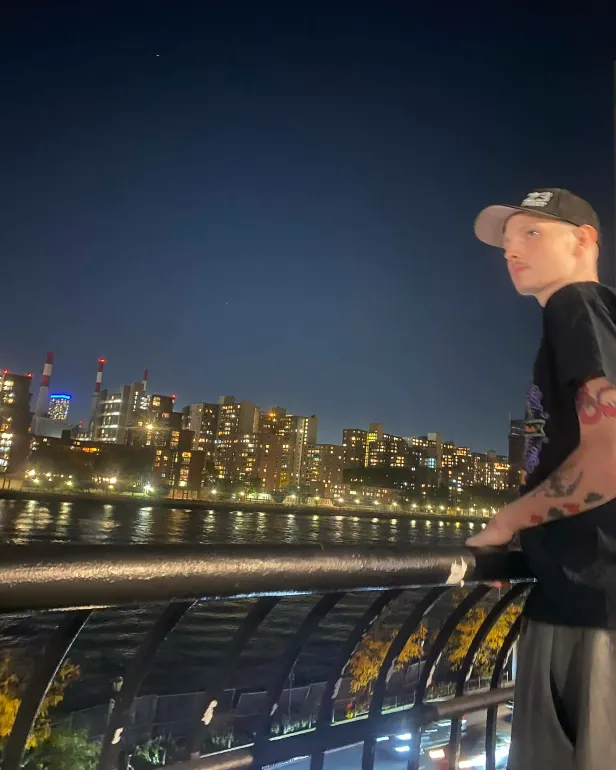

Hunter was 21 and was working as full time dispatcher, deputy coroner and firefighter when he was diagnosed with Desmoplastic Small Round Cell Tumour. Prior to diagnosis, he spent the little free time he had, hanging out with friends and family, going out on adventures or throwing a get together. He lived an active and proactive lifestyle, with no concept of what would soon come his way.
His first symptoms were abdominal pain and vomiting. It was so severe that he asked his mom to take him to the Emergency Room; something he had previously tried to avoid. At the hospital they carried out imaging scans to determine what was going on. The scans came back showing a large mass taking up space in his abdomen and pelvis. It was a time of huge uncertainty and he and his family were unsure where to go. They couldn’t remove it at the local hospital, who recommended they sought treatment at a more specialized facility. They had received the most frightening of news but were left to figure out the next steps alone.
Hunter and his family had to travel over 2 hours from home to attend doctors’ appointments and seek tests to secure a diagnosis. It wasn’t until after his port was fitted that they found out what they were dealing with. Treatment started two weeks after the mass was first found, but because DSRCT is so rare it took longer for the biopsy to come back. Doctors had tested for multiple conditions before finding the right result.
Once Hunter had the diagnosis he realised quickly that the cancer needed to be hit hard and fast. It was at this point that Hunter’s medical team advised him to go to New York City and be treated by MSKCC (Memorial Sloan Kettering Cancer Centre). Instead of travelling two hours from home he was travelling half way across the country. The rarity of DSRCT meant he was determined to seek advice from experts in it, a choice he’s glad he made. Whilst challenging to be so far from home, stays at the Ronald McDonald house made it easier.
He started cycles of treatment with the VDC/IE protocol and stayed with that course of treatment until his first surgery. Scans around that time showed that chemo hadn’t achieved a favourable response on the tumours, therefore as the cancer was still operable Hunter’s medical team decided to operate. Once healed he switched between a few other treatment plans, ultimately ending up on irinotecan and temodar as his final treatment and maintenance protocol. Hunter was also part of a trial at MSK which included one last surgery, a radioimmunotherapy flush of his abdomen and 30 days of traditional WART (whole abdominal radiation therapy).
Life during treatment was hard, there were a lot of bad days. Hunter would frequently tell his parents that he was sick and tired of being sick and tired. It takes a strong type of person to go through what patients go through, and the hardships that come with it, but Hunter learned to make the most out of the little things he had control over at the time, like time with friends and family. It was not only the fog of “chemo brain” that made life so challenging but dealing with the complex emotions that raced through his head 24/7. Whilst it wasn’t always easy to do so, these were thoughts Hunter tried to block from his brain, instead focusing on planning the life he wanted to live if he managed to beat the disease.
Now 23 Hunter is in remission and explained that the biggest change he has made is that he now spends more time with family and friends, cherishing every moment he has with them. Back living almost the same life he was before diagnosis, it still doesn’t feel real. A weight has lifted off his shoulders and he is grateful for the steps he took emotionally during treatment to help prepare him mentally for what the future brings.
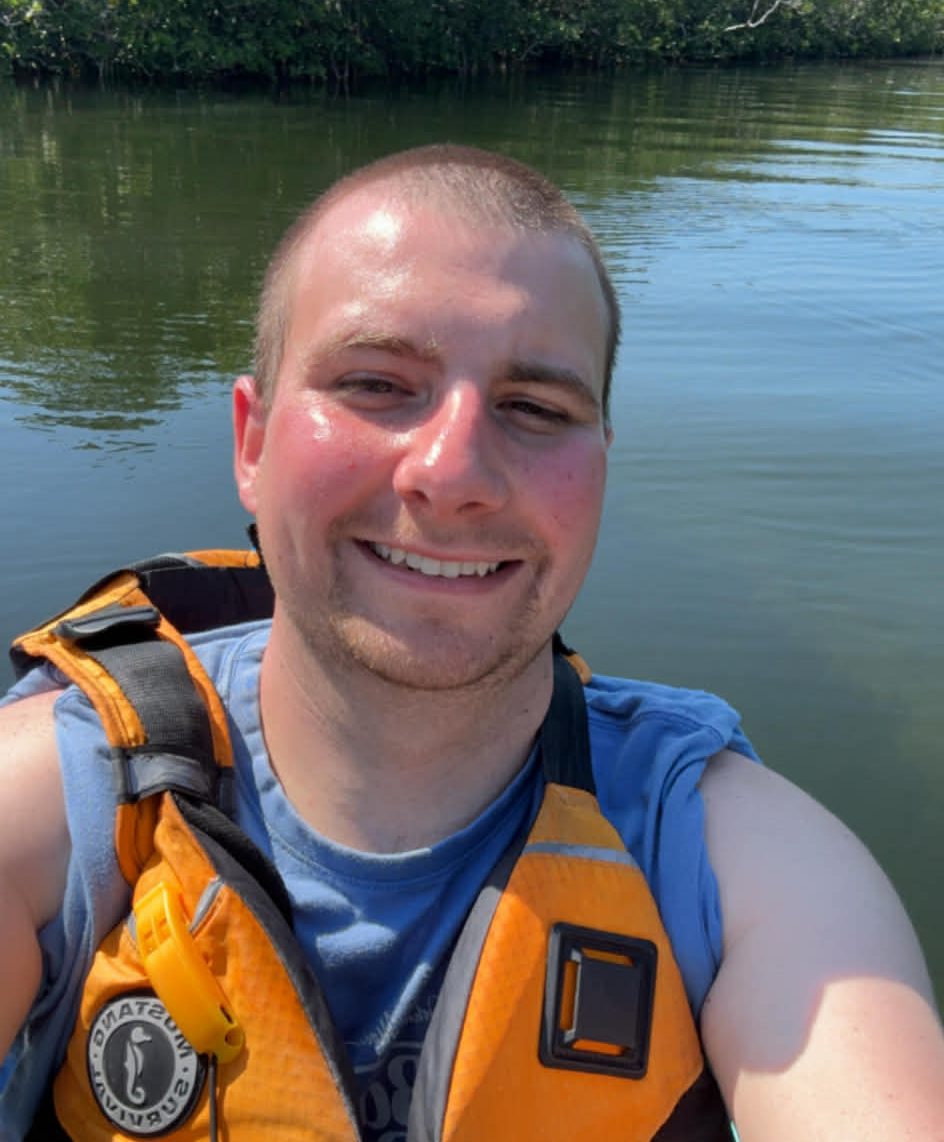

Craig was busy working and trying to build the best life he could with his wife when he was diagnosed with Desmoplastic Small Round Cell Tumour. Born and bred in New York, Craig had lost his mother to lung cancer just a year before.
His first symptom was ongoing constipation. Whilst taking laxatives things would improve but the problem returned every time he stopped. After a month of persevering on December the 26th 2024 Craig went to his primary care physician who immediately ordered a CT scan – a scan that found multiple masses in his abdomen and pelvis.
This was followed up by a PET scan which showed significant tumour spread and biopsy that was done at Craig’s local hospital. The biopsy showed that Craig had DSRCT, a cancer that the oncologist had seen only two cases of in his twenty year career, both of whom had died. Craig was told it was certain that he would die within the next five years.
Craig decided he wanted a second opinion, choosing Emily Slotkin at MSK. Dr Slotkin was honest about the prognosis, but she also offered hope of potential survival. Within five days of seeing her, he was offered chemotherapy. Treatment started a month after his original scan.
In April 2025 after 4 cycles of VDC/IE chemotherapy, Craig had his first surgical resection which was carried out by Dr Gerstile at Sloan Kettering. His spleen and gallbladder were completely removed, alongside part of his liver, stomach, pancreas and diaphram.
After his first surgery Craig did 2 more cycles of VDC/IE chemotherapy prior to his second surgery in June of 2025. In this second surgery Dr Gerstile removed part of Craig’s colon and rectum as well as resecting a tumour off his bladder. A temporary ileostomey bag was needed to give Craig’s body time to recover.
This was followed up by two more cycles of VDC/ IE before a PET scan on the 25th August 25th 2025 showed no evidence of disease. A few days later Craig’s ileostomy was reversed.
One of the most intense parts of Craig’s treatment was the month of whole abdominal radation that followed this, which included a nasty C difficile infection.
Life during treatment was very hard, despite the impacts of chemotherapy including losing his hair. Craig worked full time as a maintenance worker, only taking a few weeks off during his surgeries. His only focus was on trying to keep going – knowing that if he lost his job he would loose not only his ability to support his family but the medical insurance that was paying for his cancer treatment.
Craig is now a year post diagnosis. His last scan continues to show no evidence of disease. He is currently taking (name of chemo) maintenance chemo and trying to get back to a new normal.


Fourteen year old Sasha, a professional gymnast competing regularly in international competitions had struggled with back pain from late summer 2021.
At the time she was living with her family in Doha, Qatar. Training five times a week and pushing her body to its limits were routine for her, back pain appeared as though it came with the territory. She had tried physiotherapy and acupuncture but nothing appeared to alleviate the pain. Struggling to get comfortable at night, Sasha slept like a frog on her front with her legs tucked up.
By November, Sasha was struggling with stomach pain, often experiencing stomach upsets. A trip to her GP suggested it was probably viral, he could find nothing abnormal. By the end of the year it had become the norm as Sasha competed in an international gymnastics competition in Rome.
The daughter of a British father and a Ukrainian mother, Sasha returned to Doha in January. Determined to her core Sasha continued training despite the pain. When war broke out in the Ukraine in February 2022, the family’s worries were diverted as they tried to get Sasha’s grandma out of the country to safety.
Thankfully, it was a mission they managed and Sasha’s Grandma arrived in Doha in early March. She had been there a matter of days, on the 13th March, when Sasha’s condition rapidly deteriorated, she was heavily jaundiced and passing blood. Living in a foreign country came with complexities, not least a completely different medical system to navigate but a trip to the medical centre for bloods which showed that Sasha’s liver function was affected was followed by a trip to A and E and admission to ICU where Sasha was catheterised and given an ultrasound. This was followed by an MRI, which posed particular challenges as Sasha was unable to lie still due to the pain and therefore needed to be sedated.
The MRI found abnormal growths throughout Sasha’s abdomen including in her liver and kidneys. The head of oncology told her parents that it was unquestionably cancer and that Sasha would need a biopsy to determine the type of cancer and her treatment. It was a procedure that needed to be done back in the UK so staff at the Royal Marsden quickly became involved remotely in her care.
Unable to travel on a commercial plane because she was so unwell, Sasha was repatriated via air ambulance with her mum and dad by her side. Her siblings and grandma remained in Doha where good friends supported them in the absence of their parents, whilst the family started what would be an 18 month journey of commuting between two lives and two countries.
Once back in the UK Sasha was admitted to PICU at St George’s hospital in London where she had a biopsy and a drain fitted to remove ascites. It was the 27th March when Sasha received a diagnosis of Desmoplastic Small Round Cell Tumour, a cancer her parents had never heard of and were given little information about. Sasha was transferred to the Royal Marsden, but before she could begin treatment she needed stents in her liver (at King’s College Hospital) and her kidneys (at St George’s). They were procedures that weren’t without problems, only one out of the two liver stents were successful and surgeons were unable to place stents in her ureters which meant she had very limited kidney functionality – only 60% function in one kidney and about 20% in the other. However following the procedures Sasha was stable enough to begin chemotherapy.
In April Sasha started what would be the first of 14 cycles of VDC/ IE. Going to The Royal Marsden Hospital in Sutton for chemotherapy and the family’s local hospital in Ashford when Sasha needed blood transfusions or had an infection. Only three miles from home, Sasha had open access to the ward and quickly built up a special relationship with Dr Jill.
On Easter Sunday Sasha began to feel unwell and headed to the hospital to be checked out. It was to be the start of the most serious infection of her journey. Sasha’s body began to shut down and her organs began to fail. She was once again transferred to PICU at St George’s, where cultures came back showing a fungal infection in her line. Sasha spent just over three weeks there, dealing with the effects of chemotherapy and her hair beginning to fall out on top of the infection.
Navigating cancer, was however only part of the challenge that faced the family. Having arrived back in the UK with their own home rented out and a life and schools in Doha, accommodation and logistics were beyond complex. Sasha’s parents switched at airports monthly, going between caring for Sasha and their other children. Sasha navigated a new school despite only being able to attend for short periods and took qualifications to become a gymnastics judge. With the family planning to spend Christmas 2022 together in the UK, another hospital admission for Sasha put plans into jeopardy. It was a relief for all when she was finally discharged late Christmas Eve and the family were able to spend some much needed time together.
Like many DSRCT patients, proven treatment options for Sasha were limited and her family had begun to investigate trials for when her VCD/ IE protocol finished. As a paediatric patient these were limited with many available trials stating that participants needed to be over 18. Striking lucky and on the verge of getting accepted to a trial at Memorial Sloan Kettering Hospital in New York, the family began a fund raiser to raise the tens of thousands the trial would cost.
January brought with it mixed blessings, scan results showing Sasha’s tumours were stable but consultations with surgeons resulted in the news that the placement of those tumours meant any debulking surgery was impossible. Worse yet Sasha’s prospect of starting on the trial was revoked because of an issue with the drug being trialled, which meant it was no longer available to new patients.
It was back to the drawing board and despite trying to reach out worldwide no new viable trials or surgical options were available.
In March 2023 her family decided to try complementary therapies and Sasha and her dad headed to Switzerland for holistic treatment. Sasha’s dad explained that at that point it felt as though they had nothing to lose. They stayed for three weeks and took part in a protocol that involved thermal and magnetic treatment, with emphasis of eating organic vegan produce alongside it. It was a protocol Sasha hated, she longed for home, missed her home comforts and found the regime restrictive and frustrating.
Back in the UK, Sasha’s liver stent needed changing and she had further surgery at King’s College Hospital. This was followed by a bout of pancreatitis where doctors struggled to get the pain under control. Sadly, at this time scans showed her tumours had also started to grow again. Sasha went back to Switzerland for further treatment but decided she no longer wished to continue that program. By this time Sasha’s weight had dropped significantly and she was very weak.
In July 2023 the family were finally reunited, all moving back home to the UK. In September Sasha commenced further chemotherapy using the VIT protocol but after only one cycle it was clear that she was unable to tolerate the chemotherapy in her weakened state. Sasha stopped all treatment in September 2023, having made the decision to stop treatment and told Dr Jil that she simply could no longer continue, her weight had dropped dramatically and she was extremely weak. In October she started palliative care.
Once again Sasha was in hospital on Christmas Eve, but once again she made it home as the family set about making sure it was the best Christmas ever. A room crammed with presents, but more importantly a room filled with love.
In the months that followed Sasha’s pain was kept under control with fentanyl patches and ketamine. She continued to attend school for short periods whenever she could, enjoying the normality it brought to her life. Sasha loved spending time with her friends both those she had newly made and her friends from Doha when they were able to visit. One particularly memorable evening was when a friend flew from Doha to accompany her to The Royal Albert Hall – a night of party dresses and magic – a night to be a young woman not a patient with cancer.
Sasha celebrated her 16th birthday in January 2024 alongside her friends with an ABBA themed party. She celebrated to the full. Sasha would have love to travel, yearning for the Maldives and her friends in Doha but her weakened condition and lack of availability of travel / medical insurance meant neither were possible. Sasha died in May 2024, just over two years after her diagnosis knowing she was loved and that her family would have done anything for her happiness.